

Forklift Rental vs. Lease vs. Purchase: Which Is Best for You?
Deciding whether to rent, lease, or purchase a forklift isn’t always clear-cut. Maybe your warehouse experiences seasonal demand spikes? Or, you might need reliable forklifts long-term and want to build equity in your assets. Each scenario calls for a different approach.
Understanding the differences between forklift rental vs. lease vs. purchase can help you make a decision that aligns with your budget, operational needs, and long-term goals. Below, we’ll break down the benefits and considerations of each option so you can choose what works best for your business.
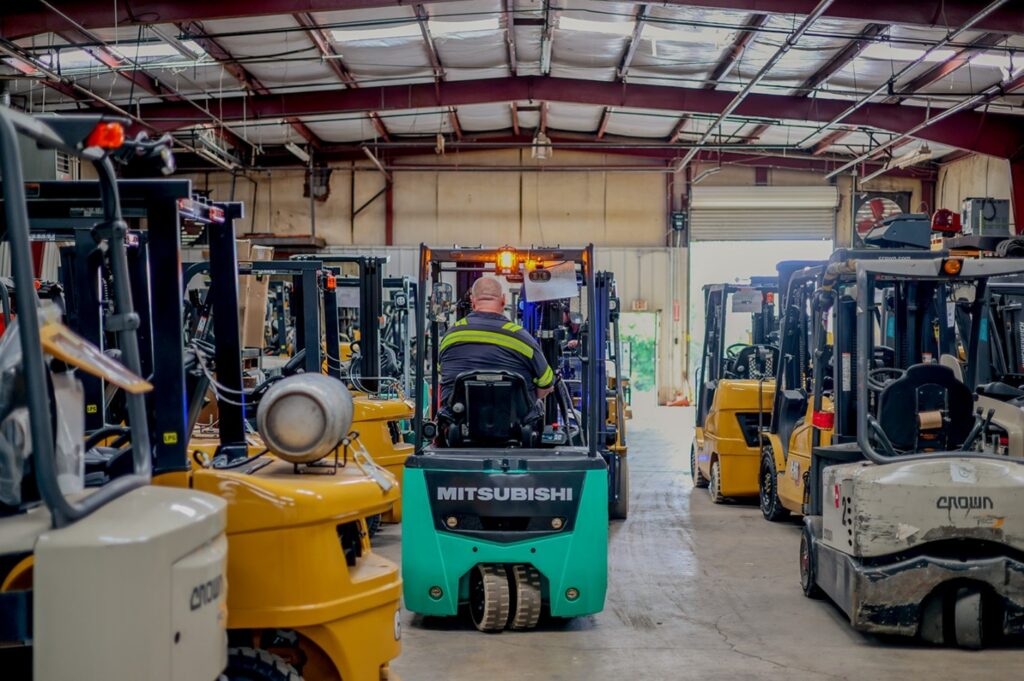
The Benefits of Forklift Rentals
Renting forklifts offers flexibility and convenience, especially when your needs are temporary or unpredictable. Here’s why short-term forklift rental might be the right choice for you:
- Flexibility for Changing Demands – Seasonal equipment rental is ideal for businesses that experience fluctuating workloads. Retailers preparing for holiday rushes, warehouses handling peak inventory periods, or construction companies working on short-term projects can rent forklifts as needed without committing to ownership.
- No Long-Term Commitments – If you’re unsure about future equipment needs or want to test different forklift models before making a larger commitment, renting provides a low-risk way to evaluate your options. Testing equipment under real-world conditions helps you determine whether a gas-powered or electric forklift suits your operation better.
- Access to the Latest Equipment – Newer forklifts often include improved safety features, better energy efficiency, and ergonomic designs that reduce operator fatigue. Renting gives you access to these innovations without the upfront cost of purchasing new equipment. By renting, you can use state-of-the-art equipment tailored to your current needs.
What to Consider When Renting Forklifts
While renting offers many benefits, there are a few factors to consider. High-demand periods can lead to shortages in rental fleets, so waiting too long to secure equipment may result in limited availability or settling for a less-than-ideal model. Renting also means paying for temporary use without building ownership, which may not be ideal for businesses that rely on the same equipment over long periods.
Why Forklift Leasing Might Be Your Best Move
Leasing strikes a balance between renting and purchasing. It provides access to reliable equipment with lower upfront costs and fixed monthly payments. Here’s why leasing might work for your business:
- Lower Initial Investment – Leasing spreads the cost of equipment over a fixed term, making it more affordable upfront. This is particularly helpful for startups or small businesses with limited capital. Instead of depleting cash reserves, you can allocate funds to other critical areas, such as hiring, marketing, or inventory.
- Fixed Monthly Payments – Leases typically include fixed monthly payments, often covering maintenance and repairs. This consistency makes budgeting easier and reduces the risk of unexpected expenses. Knowing exactly what you’ll spend each month helps with financial planning, especially when managing multiple leases.
- Access to Specialized Equipment – Leasing allows you to acquire specialized forklifts that might be too expensive to purchase outright. Construction companies may need forklifts with unique attachments, and manufacturers might require high-capacity models for heavy loads or narrow-aisle forklifts for compact spaces.
Considerations When Leasing Forklifts
Leasing a forklift is a significant decision, and it’s important to consider if the terms align with your long-term business goals. A lease is a commitment, and agreements are structured to provide stability and predictable costs over a set period. It’s wise to review the terms, including usage conditions and the duration of the agreement, to ensure they match your operational forecasts. While leasing offers attractive lower upfront costs, it’s a good practice to evaluate the total investment over the lease term to make the most financially sound choice for your company.
Key Advantages of a Forklift Purchase
Forklift outright purchases offer full control and long-term savings. Here’s why forklift ownership could be the best choice for you:
- Full Ownership and Control – Purchasing a forklift means you have complete control over its usage, maintenance, and life cycle. Busy warehouses operating around the clock won’t have to worry about exceeding usage limits or lease restrictions. The equipment becomes a dependable asset that supports uninterrupted productivity.
- Customization Options – Ownership allows for complete customization. You can add specialized attachments, such as side shifters, telescopic forks, or high-capacity lifts, to maximize efficiency. Customization improves productivity and reduces the need for additional equipment.
- Long-Term Savings – Once the initial investment is recouped, the only ongoing expenses are maintenance and repairs. Over time, ownership can be more cost-effective than renting or leasing. Well-maintained forklifts may also retain resale value, allowing you to recover a portion of your investment if you decide to upgrade or sell.
What to Know Before Purchasing Forklifts
Purchasing a new forklift requires careful planning and consideration of your long-term needs. While the upfront investment is higher than renting, it’s important to view it as a long-term asset for your business. As the owner, you’ll be responsible for ongoing maintenance and repairs, which ensures your equipment remains in optimal condition. Although forklifts depreciate over time, a well-maintained machine will retain its resale value, allowing you to recover a portion of your investment when you decide to upgrade or sell.
Key Factors to Consider When Deciding on an Option
Choosing between renting, leasing, or purchasing depends on several factors unique to your business. These include:
- Budget – Renting offers the lowest upfront cost, while purchasing requires a significant initial investment. Leasing falls somewhere in between with fixed monthly payments.
- Usage Frequency – For occasional or seasonal use, renting makes sense. For consistent, long-term use, purchasing or leasing may be more cost-effective.
- Flexibility Needs – If your business faces changing demands or uncertain growth, renting provides the most flexibility. Leasing and purchasing involve longer commitments.
- Maintenance Capabilities – If you want to reduce maintenance resources, renting or leasing can save time and money. Ownership requires you to handle all upkeep.
Rent, Lease, or Buy? A Quick Decision Guide
Still unsure which option is right for you? Use this quick guide by Bailey:
Choose renting if:
- You need equipment for a short-term project or seasonal demand.
- You want to test different forklift models before committing.
- You prefer predictable costs with no maintenance responsibilities.
Choose leasing if:
- You need equipment long-term but want lower upfront costs.
- You value fixed monthly payments and included maintenance.
- You want access to specialized equipment without the full purchase price.
Choose purchasing if:
- You have the capital for a significant upfront investment.
- You need equipment consistently for many years.
- You want full control, customization, and long-term savings.
Maximize Productivity With the Right Forklift Strategy
Deciding between forklift rental, lease, or purchase depends on your budget, operational needs, and long-term goals. Whether you’re managing seasonal demand, scaling your fleet, or investing in long-term assets, the right choice will help you maintain productivity and profitability. Contact us today to learn more about our forklift rental and purchase options available through our branches in Knoxville, Chattanooga, Nashville, and Seattle, and ensure you have the right tools to keep your business moving forward.